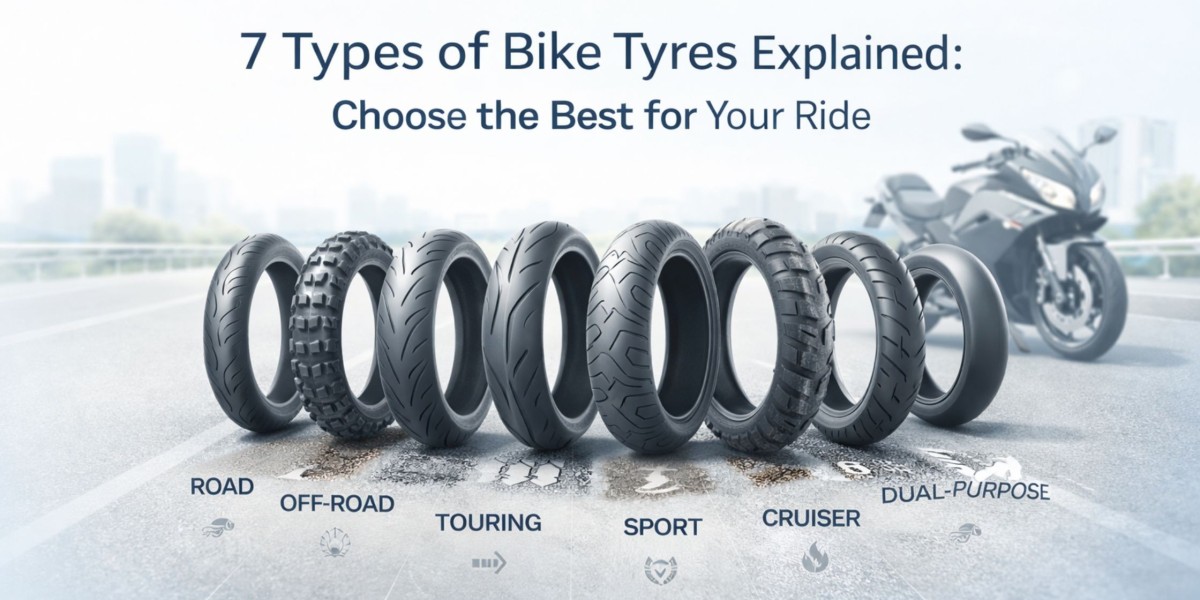

Different Type of Bike Tyres play a crucial role in determining your bike’s performance, safety, and comfort on the road. Choosing the right tyre not only improves riding experience but also enhances grip, fuel efficiency, and overall control.
When it comes to selecting the ideal tyre, many riders often overlook how different tyre types are designed for specific riding conditions. Understanding these differences can help you make a smarter and safer choice.
Why Choosing the Right Bike Tyre Matters
Bike tyres are the only point of contact between your motorcycle and the road. Whether you ride daily in city traffic or enjoy long highway trips, the right tyre ensures:
- Better road grip and stability
- Improved braking performance
- Enhanced fuel efficiency
- Increased tyre lifespan
- Safer riding experience
Selecting the wrong type of tyre can lead to poor handling, faster wear, and even accidents.
7 Types of Bike Tyres Explained
1. Tube Tyres
Tube tyres are the traditional type used in many commuter bikes. They consist of an inner tube that holds air inside the tyre.
Key Features:
- Affordable and easy to replace
- Suitable for low-speed riding
- Common in entry-level bikes
Best For: Daily commuting in cities
Drawback: Higher chances of sudden puncture
2. Tubeless Tyres
Tubeless tyres are now widely used in modern bikes due to their safety and convenience.
Key Features:
- No inner tube required
- Air leaks slowly in case of puncture
- Better heat resistance
Best For: City and highway riding
Advantage: Reduced risk of sudden tyre burst
3. Radial Tyres
Radial tyres are designed with layers arranged radially, offering flexibility and better grip.
Key Features:
- Superior road contact
- Better heat dissipation
- Enhanced comfort during long rides
Best For: High-speed bikes and long-distance tourin
4. Bias (Cross-Ply) Tyres
These tyres have layers arranged diagonally, making them stronger and more durable.
Key Features:
- Strong sidewalls
- Better load-carrying capacity
- Cost-effective
Best For: Heavy bikes and rough road
5. Off-Road Tyres (Knobby Tyres)
Off-road tyres are designed for rough terrains like mud, sand, and dirt.
Key Features:
- Deep grooves and large knobs
- Excellent traction on uneven surfaces
- Durable construction
Best For: Adventure riding and off-roading
6. Touring Tyres
Touring tyres are built for long-distance rides, offering comfort and durability.
Key Features:
- Long-lasting tread
- Balanced grip and stability
- Comfortable ride quality
Best For: Highway rides and touring enthusiast
7. Performance (Sport) Tyres
Performance tyres are designed for speed and precision.
Key Features:
- High grip levels
- Soft rubber compound
- Excellent cornering ability
Best For: Sports bikes and racing
Drawback: Faster wear compared to other tyre
How to Choose the Right Bike Tyre
Selecting the right tyre depends on your riding style and road conditions. Here are a few factors to consider:
1. Riding Purpose
- Daily commute → Tubeless or Tube tyres
- Long rides → Touring or Radial tyres
- Off-road → Knobby tyres
2. Road Conditions
- City roads → Tubeless tyres
- Highways → Radial tyres
- Rough terrain → Off-road tyres
3. Budget
- Tube tyres are budget-friendly
- Tubeless and radial tyres cost more but offer better safety
4. Weather Conditions
- Wet conditions require tyres with better tread patterns
- Dry conditions allow for performance tyres
Maintenance Tips for Longer Tyre Life
To get the best performance from your bike tyres, regular maintenance is essential:
- Check tyre pressure weekly
- Inspect tread wear regularly
- Avoid overloading your bike
- Maintain proper wheel alignment
- Replace tyres when tread depth is low
Proper care not only increases tyre life but also ensures your safety on the road.
Frequently Asked Questions (FAQs)
1. Which type of bike tyre is best for daily use?
Tubeless tyres are the best option for daily commuting due to their safety and low maintenance.
2. What is the difference between radial and bias tyres?
Radial tyres offer better grip and comfort, while bias tyres are stronger and more durable for heavy loads.
3. How long do bike tyres last?
On average, bike tyres last between 25,000 to 40,000 kilometers, depending on usage and maintenance.
4. Can I use off-road tyres on city roads?
Yes, but they are not ideal as they wear out faster and may reduce fuel efficiency.
5. When should I replace my bike tyres?
You should replace tyres when tread depth is low, cracks appear, or grip reduces significantly.
Conclusion
Choosing the right bike tyre is not just about performance—it’s about safety, comfort, and long-term savings. Each type of tyre is designed for a specific purpose, and understanding these differences helps you make an informed decision. Whether you are a daily commuter or a passionate rider, selecting the right tyre ensures a smoother and safer journey.
Along with choosing the right tyres, having a reliable bike insurance plan is equally important. Square Insurance helps protect your ride from unexpected damages, ensuring complete peace of mind on every journey.