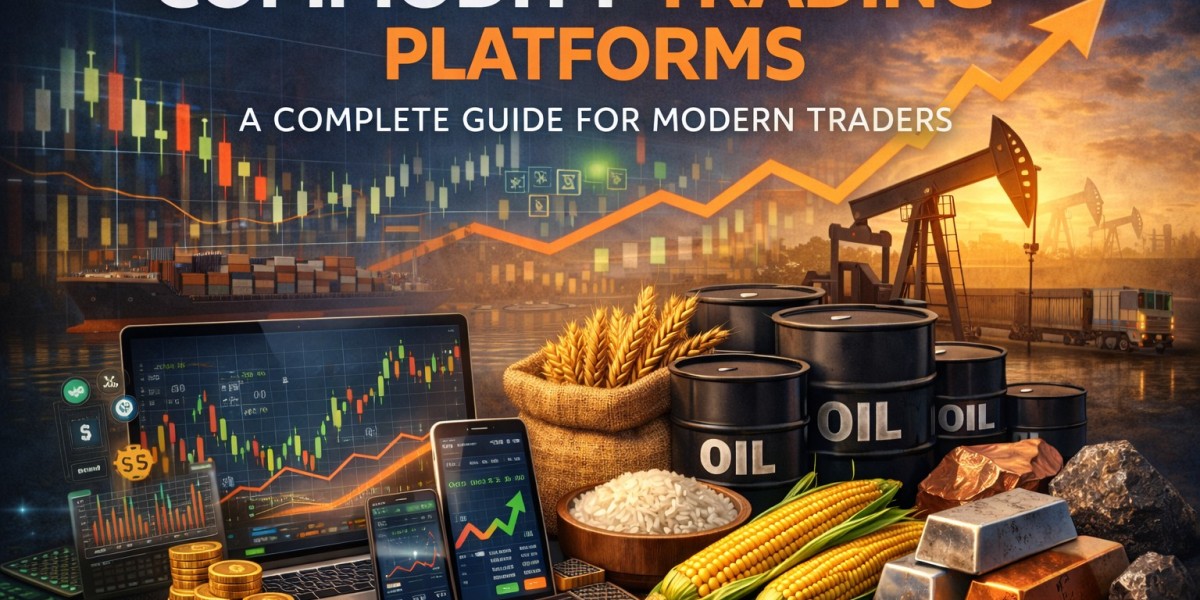

Commodity trading has become increasingly popular in India as investors look beyond traditional assets like stocks and mutual funds. Commodities such as gold, silver, crude oil, natural gas, and agricultural products offer unique opportunities to diversify portfolios and hedge against inflation. With the rapid advancement of technology, traders no longer need to rely on traditional brokers or complicated platforms. Today, everything can be managed conveniently through a mobile trading application.
A modern commodity trading app allows investors to track live prices, analyze market trends, execute trades, and manage their portfolios in real time. This accessibility has made commodity trading easier for beginners while also giving experienced traders powerful tools to make better decisions.
In this guide, we will explore how commodity trading apps work in India, their key features, benefits, and how traders can choose the right platform for their trading journey.
Understanding Commodity Trading in India
Commodity trading refers to the buying and selling of raw materials or primary agricultural products. In India, commodity trading primarily happens on regulated exchanges such as:
- MCX (Multi Commodity Exchange)
- NCDEX (National Commodity and Derivatives Exchange)
These exchanges allow traders to buy or sell commodity futures contracts based on expected price movements.
Some of the most actively traded commodities in India include:
- Gold
- Silver
- Crude Oil
- Natural Gas
- Copper
- Zinc
- Agricultural commodities like cotton and soybean
Commodity markets often behave differently from equity markets. Prices are influenced by global demand, geopolitical events, supply disruptions, weather conditions, and currency fluctuations. Because of these factors, commodities can offer profitable trading opportunities when approached with the right strategies.
Rise of Mobile-Based Commodity Trading
Earlier, commodity trading required constant interaction with brokers and desktop trading terminals. However, the rise of fintech platforms has transformed the way investors participate in markets.
Mobile trading applications now provide instant access to markets anytime and anywhere. Investors can:
- Monitor live commodity prices
- Place buy or sell orders instantly
- Track portfolio performance
- Access technical charts
- Receive real-time market alerts
For new investors, mobile platforms reduce complexity and provide a simple interface that makes trading more accessible.
Key Features of a Good Commodity Trading App
Choosing the right trading platform is crucial for a smooth trading experience. The best commodity trading apps typically offer several essential features that help traders make informed decisions.
1. Real-Time Market Data
Accurate and real-time market data is essential for commodity trading. Since prices fluctuate rapidly, traders must receive live updates to execute trades at the right time.
A reliable app should provide:
- Live commodity price charts
- Market depth information
- Price alerts and notifications
These tools help traders stay updated on market movements.
2. Advanced Charting Tools
Technical analysis plays a major role in commodity trading. A strong trading app should offer advanced charting tools that allow users to analyze price movements.
Important charting features include:
- Multiple time-frame charts
- Technical indicators (RSI, MACD, Moving Averages)
- Drawing tools for trend lines and support levels
These features help traders identify potential entry and exit points.
3. Fast Order Execution
Speed is critical in commodity markets. Even small price changes can significantly impact profit or loss.
A high-quality trading app ensures:
- Quick order placement
- Minimal lag during volatile markets
- Reliable trade confirmations
Fast execution ensures traders can act quickly when market opportunities arise.
4. User-Friendly Interface
A complicated interface can make trading confusing, especially for beginners. The best apps focus on simplicity and intuitive navigation.
Users should be able to easily:
- View watchlists
- Place trades
- Monitor positions
- Access reports and statements
A clean design improves the overall trading experience.
Benefits of Using a Commodity Trading App
Mobile trading platforms provide several advantages that make them ideal for both beginners and experienced investors.
Convenience
Traders can monitor markets and execute trades anytime without relying on traditional brokerage offices.
Faster Decision Making
Real-time market updates allow traders to react quickly to market movements.
Portfolio Diversification
Commodity trading apps make it easier to diversify investments beyond stocks and mutual funds.
Lower Costs
Many modern trading platforms offer competitive brokerage rates and transparent pricing structures.
Pocketful: A Modern Platform for Commodity Trading
One of the emerging platforms making commodity trading more accessible in India is Pocketful. Designed with modern investors in mind, Pocketful provides a powerful yet easy-to-use trading experience.
Traders can explore commodities through the platform's dedicated section here:
commodity trading app
Pocketful focuses on providing traders with essential tools and a seamless interface that simplifies market participation.
Some advantages of using platforms like Pocketful include:
- Smooth mobile trading experience
- Reliable market data
- Easy portfolio tracking
- Simple order execution
These features help traders focus more on strategy and less on technical complications.
Role of Margin Trading in Commodity Markets
Margin trading is another important aspect of active trading. It allows traders to take larger positions in the market by paying only a fraction of the total trade value.
This is particularly useful for short-term traders who aim to capture price movements without committing the full capital.
Understanding margin requirements and borrowing costs is important before using leverage. Investors often compare platforms offering competitive mtf interest rates to optimize their trading strategies.
While margin trading can increase potential profits, it also carries higher risk, so traders should use it responsibly.
Tips for Beginners Entering Commodity Trading
Commodity trading can be rewarding, but beginners should approach it with proper knowledge and discipline.
Here are some practical tips:
Start with Market Research
Before trading, understand how commodity markets work and what factors influence prices.
Follow Global News
Commodity prices often react to international developments such as geopolitical tensions, oil production decisions, or economic policies.
Use Risk Management
Always set stop-loss levels to limit potential losses.
Avoid Overtrading
New traders sometimes place too many trades in a short period. A disciplined approach is usually more effective.
Learn Technical Analysis
Understanding chart patterns and indicators can significantly improve trading decisions.
Common Commodities Traded by Indian Investors
Many commodities attract traders due to their liquidity and price volatility.
Gold
Gold is often considered a safe-haven asset and is widely traded during times of economic uncertainty.
Silver
Silver is popular among traders because of its price volatility and industrial demand.
Crude Oil
Crude oil is one of the most actively traded commodities globally and responds strongly to geopolitical events.
Natural Gas
Natural gas prices are influenced by seasonal demand and supply conditions.
Base Metals
Metals like copper, zinc, and aluminum are commonly traded due to their importance in manufacturing and infrastructure development.
How Technology Is Transforming Commodity Trading
Technology continues to reshape financial markets, and commodity trading is no exception.
Modern trading apps now integrate features such as:
- Artificial intelligence market insights
- Advanced analytics dashboards
- Algorithmic trading tools
- Real-time news feeds
These innovations allow traders to make data-driven decisions and stay competitive in fast-moving markets.
The Future of Commodity Trading Apps in India
India’s commodity trading ecosystem is evolving rapidly. With increasing internet penetration and smartphone usage, more investors are exploring mobile trading platforms.
Fintech innovation will likely bring:
- More intuitive trading platforms
- AI-powered market insights
- Faster order execution
- Improved risk management tools
As these technologies develop, commodity trading will become even more accessible to everyday investors.
Conclusion
Commodity trading has become an attractive opportunity for investors looking to diversify their portfolios and take advantage of global market movements. Thanks to modern mobile platforms, accessing commodity markets is now simpler than ever.
A reliable trading platform can provide real-time data, advanced analytical tools, and seamless order execution, enabling traders to participate in markets confidently.
Platforms like Pocketful are helping simplify this process by offering intuitive tools and modern trading infrastructure designed for today’s investors. Whether you are a beginner exploring new investment options or an experienced trader seeking better technology, choosing the right trading app can significantly enhance your trading journey.
As technology continues to evolve, commodity trading apps will play an even bigger role in shaping how Indian investors engage with global markets.