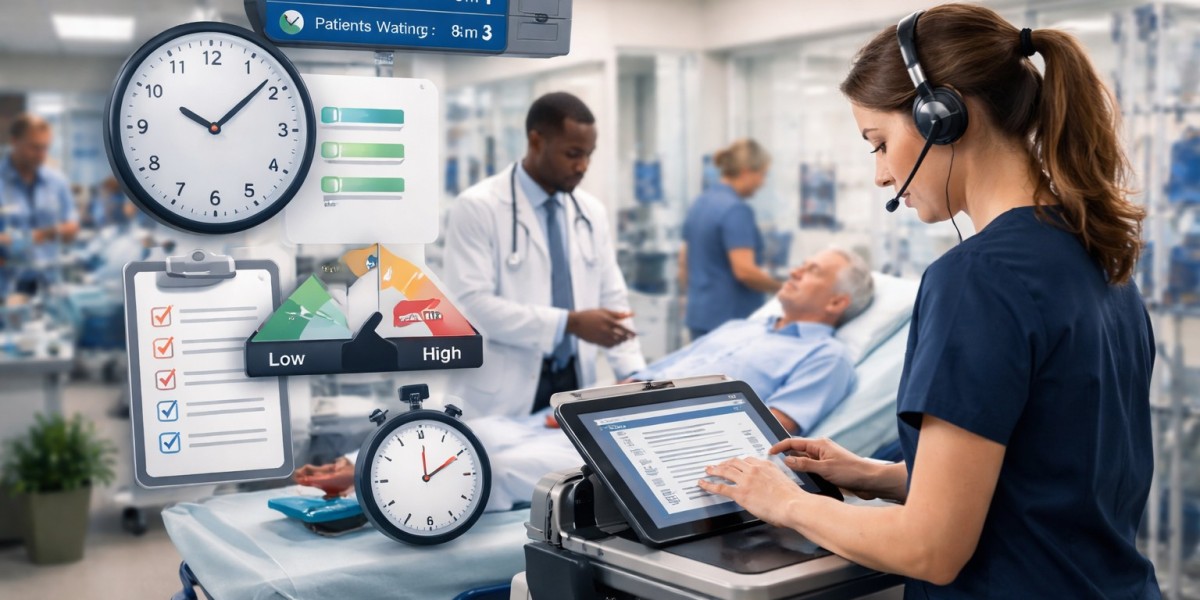

Emergency departments (EDs) operate under constant pressure—balancing patient volume, clinical urgency, and operational efficiency. One of the most critical performance indicators in this environment is throughput, which measures how quickly and effectively patients move through the ED from arrival to discharge or admission.
As hospitals strive to meet strict throughput benchmarks without compromising care quality, emergency medical scribes have emerged as a powerful solution.
What Are Throughput Benchmarks in the ED?
Throughput benchmarks are key performance metrics used to evaluate the efficiency of an emergency department. These typically include:
- Door-to-doctor time – How quickly a patient is seen by a provider
- Length of stay (LOS) – Total time spent in the ED
- Time to disposition – How long it takes to decide discharge or admission
- Left without being seen (LWBS) rates
- Boarding time – Time patients wait for inpatient beds
Meeting these benchmarks is essential for:
- Patient satisfaction
- Clinical outcomes
- Hospital revenue and reimbursements
- Regulatory compliance
The Throughput Challenge in Emergency Departments
Despite best efforts, many EDs struggle with:
- Increasing patient volumes
- Documentation burden on physicians
- EHR inefficiencies
- Staffing shortages
- Complex cases requiring detailed charting
Physicians often spend hours on documentation, reducing the time available for direct patient care—ultimately slowing down throughput.
How Emergency Scribes Improve Throughput
1. Faster Documentation, Faster Patient Flow
Emergency scribes handle real-time charting, allowing physicians to complete documentation during or immediately after patient encounters.
Impact:
- Reduced charting delays
- Faster patient turnaround
- Shorter length of stay
2. Reduced Door-to-Doctor Time
With scribes managing documentation, physicians can see more patients in less time.
Result:
- Quicker initial evaluations
- Improved patient flow from triage to treatment
- Lower wait times
3. Accelerated Clinical Decision-Making
Scribes ensure that all relevant patient information—history, labs, imaging, and notes—is accurately documented and easily accessible.
This allows physicians to:
- Make quicker decisions
- Avoid delays caused by incomplete data
- Improve time to disposition
4. Improved Discharge and Admission Efficiency
Clear and complete documentation supports faster discharge instructions and admission processes.
Scribes help by:
- Preparing charts in real time
- Ensuring all required details are captured
- Reducing back-and-forth corrections
5. Lower Left Without Being Seen (LWBS) Rates
Long wait times often lead to patients leaving before treatment.
By improving throughput:
- Patients are seen faster
- Wait times decrease
- LWBS rates drop
6. Enhanced EHR Efficiency
Navigating electronic health records (EHRs) can slow providers down significantly.
Scribes:
- Enter data directly into the system
- Manage templates and workflows
- Reduce time spent on clicks and navigation
Real-World Impact: Throughput Gains with Scribes
Studies and industry reports suggest that medical scribes can:
- Improve physician productivity by 20–30%
- Reduce patient length of stay
- Increase patients seen per hour
- Enhance overall ED efficiency
These improvements directly contribute to meeting—and often exceeding—throughput benchmarks.
Before vs After: ED Performance with Scribes
| Metric | Without Scribes | With Emergency Scribes |
|---|---|---|
| Door-to-Doctor Time | Longer | Reduced |
| Length of Stay | Higher | Lower |
| Patients Seen per Hour | Limited | Increased |
| Documentation Completion | Delayed | Real-time |
| Physician Workload | High | Reduced |
Beyond Throughput: Additional Benefits
While throughput is a key focus, scribes also deliver broader advantages:
✔ Reduced Physician Burnout
Less time on documentation means more time for patient care—and better work-life balance.
✔ Improved Patient Satisfaction
Faster care and more physician attention enhance the overall patient experience.
✔ Better Revenue Capture
Accurate, complete documentation supports appropriate coding and reimbursement.
✔ Audit-Ready Documentation
Well-structured charts reduce compliance risks and support quality reporting.
Why Emergency Scribes Are a Strategic Investment
In today’s fast-paced healthcare environment, improving throughput is not just an operational goal—it’s a necessity. Hospitals that fail to meet benchmarks risk:
- Lower patient satisfaction scores
- Financial penalties
- Staff burnout
- Decreased care quality
Emergency scribes provide a scalable, cost-effective way to address these challenges.
Final Thoughts
Meeting emergency department throughput benchmarks requires more than process changes—it demands smarter resource utilization. By offloading documentation tasks and enabling physicians to focus on patient care, emergency medical scribes play a crucial role in driving efficiency.
For hospitals looking to improve patient flow, reduce delays, and maintain high-quality care, integrating scribes into the ED workflow is a proven and impactful strategy.