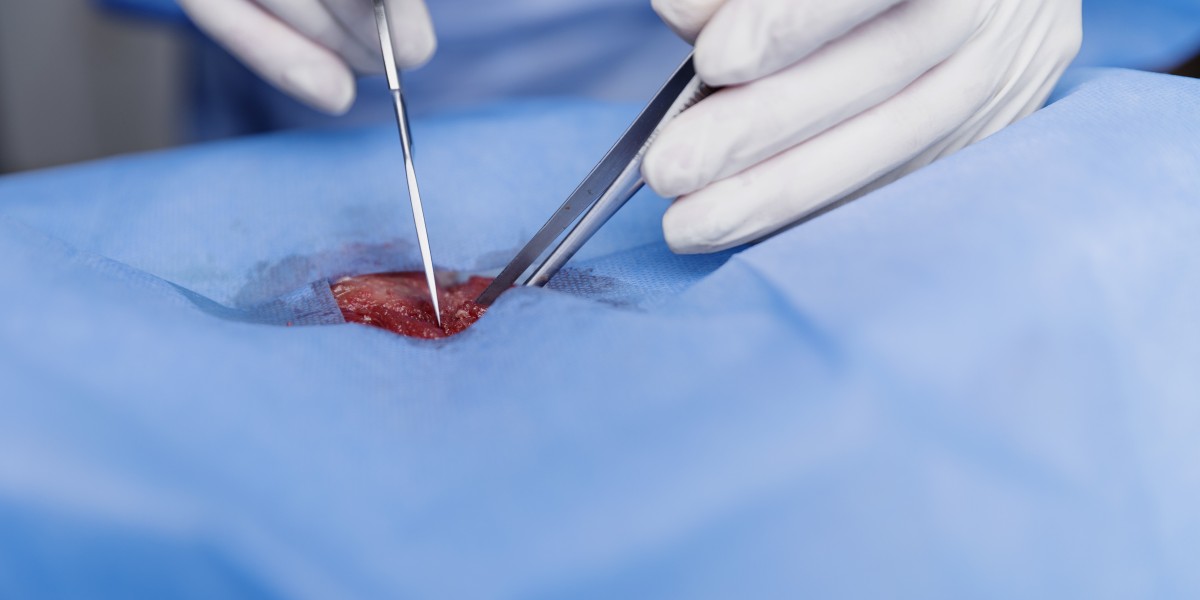

Lacerations are among the most common soft tissue injuries encountered in veterinary surgery. These wounds can vary from minor superficial cuts to deep, complex injuries involving multiple tissue layers. The success of wound closure depends heavily on choosing the correct suture for laceration repair.
Understanding Lacerations and Wound Healing Principles
Before selecting a suture for laceration, it is important to understand the nature of lacerations and the basic principles of wound healing. Lacerations are traumatic disruptions of soft tissues, often irregular in shape and frequently contaminated.
The primary goal in treatment is to achieve effective wound closure, ideally through healing by first intention. Several elements influence healing, including tissue viability, contamination level, wound tension, and the patient’s overall health. The chosen suture for laceration must support proper tissue alignment until natural healing processes take over.
Types of Lacerations
Lacerations can be categorized based on their depth and severity:
Superficial lacerations
Affect mainly the skin and subcutaneous layers.
Deep lacerations
Involve deeper structures such as muscles, fascia, or tendons.
Puncture wounds
Small surface openings with possible deep internal damage.
Avulsion injuries
Severe cases where tissue is torn away from the body.
Each category presents unique challenges, making the selection of the appropriate suture for laceration essential.
Key Suture Characteristics for Laceration Repair
Choosing the correct suture for laceration depends on several material properties that influence healing and tissue response.
Absorbable vs. Non-Absorbable Sutures
One of the most important considerations is whether the suture material is absorbable.
Absorbable sutures
These gradually lose strength and are broken down by the body. They are suitable for internal tissues that heal relatively quickly, such as muscle and subcutaneous layers.
Non-absorbable sutures
These provide long-term support and are commonly used for skin closure or areas under tension where sutures may need to be removed later.
Monofilament vs. Multifilament Structure
The structure of the suture also affects its performance as a suture for laceration.
Monofilament sutures
Made from a single strand, they offer smooth passage through tissue, reduced friction, and lower risk of bacterial contamination.
Multifilament sutures
Composed of braided strands, they provide better handling and knot security but may increase infection risk due to higher capillarity.
Tensile Strength and Tissue Response
The tensile strength of a suture for laceration must align with the demands of the healing tissue. Sutures that are too strong may damage tissue, while weaker sutures may lead to wound separation.
Equally important is minimizing tissue reaction. Materials that cause less inflammation support faster and more efficient healing.
Factors Influencing Suture Selection for Lacerations
Selecting the most appropriate suture for laceration requires careful evaluation of both the wound and the patient.
Tissue Type and Location
Skin
Non-absorbable monofilament sutures are commonly preferred due to their low tissue reaction and ease of removal.
Subcutaneous tissue
Absorbable sutures are typically used to eliminate dead space and support healing.
Muscle and fascia
Stronger sutures may be required depending on the tension involved.
Mucosal tissue
Rapidly absorbable sutures are ideal to reduce irritation.
Wound Tension
High-tension wounds require sutures with strong tensile properties. In such cases, selecting the right suture for laceration is crucial to prevent wound breakdown.
Contamination and Infection Risk
For contaminated wounds, monofilament sutures are generally preferred. Their smooth structure reduces bacterial adherence and lowers infection risk, making them a better choice for high-risk cases.
Patient Factors
Age and health
Healthy animals tend to heal faster, while older or compromised patients may need longer support.
Activity level
Active animals place more stress on wound closures, requiring durable sutures and secure techniques.
Cosmetic Outcomes
In visible areas, careful selection of a suture for laceration is important for aesthetic results. Fine sutures and subcuticular techniques can improve healing appearance. Tissue adhesives may also be considered in certain cases.
Surgical Needles and Suturing Techniques
Successful laceration repair depends not only on the suture for laceration but also on proper needle selection and suturing methods.
Needle type
Reverse cutting needles are commonly used for skin, while tapered needles are better suited for delicate internal tissues.
Needle size
The smallest effective needle should be used to reduce tissue trauma.
Common techniques include:
Simple interrupted sutures for flexibility and control
Continuous sutures for speed
Cruciate sutures for tension distribution
Mattress sutures for wound eversion
Subcuticular sutures for improved cosmetic outcomes
In some cases, advanced options like barbed sutures may improve efficiency and reduce procedure time.
Practical Considerations and Best Practices
To achieve optimal outcomes when using a suture for laceration, veterinary professionals should follow key surgical principles:
Maintain aseptic technique
Strict sterility reduces infection risk.
Perform proper debridement
Remove all non-viable tissue and contaminants.
Ensure hemostasis
Prevent hematoma formation, which can delay healing.
Achieve tension-free closure
Reduce stress on the wound to prevent dehiscence.
Select appropriate suture size
Use the smallest effective diameter.
Secure knots properly
Ensure stability without compromising blood flow.
Conclusion
Choosing the correct suture for laceration in veterinary practice is a critical decision that directly affects healing and patient recovery. It requires a strong understanding of suture materials, tissue behavior, and surgical techniques.
By carefully evaluating factors such as absorbability, structure, tensile strength, and wound condition, veterinary professionals can select the most suitable suture for laceration and significantly improve surgical outcomes.
Using high-quality materials and maintaining best surgical practices will enhance patient care and reduce complications. For veterinary clinics seeking reliable and high-performance surgical products, Gexfix International Corp. offers a comprehensive range of solutions tailored to modern veterinary needs.