
Introduction
Running ads in 2026 isn’t just about budget anymore—it’s about creative strategy.
Most brands don’t fail because they lack tools. They fail because they don’t know:
- what to test
- why something worked
- or how to repeat success
That’s exactly where tools like Motion and Deepsolv come in. Both use AI to improve ad performance—but they approach the problem from completely different angles.
If you're trying to decide between them, this breakdown will make things simple.
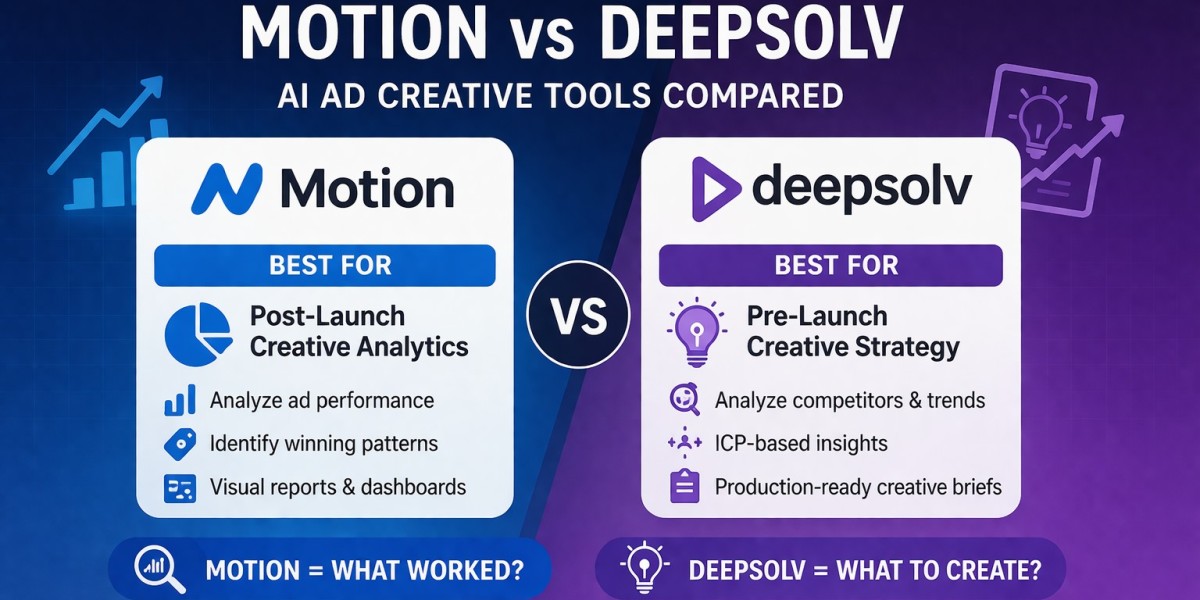
Motion vs Deepsolv: A Quick Breakdown
Before diving deep, here’s the simplest way to understand it:
- Motion → Helps you analyze ads after they run
- Deepsolv → Helps you decide what ads to create before launching
That one difference changes everything.
What Motion Does Well
Motion is built for teams already running multiple campaigns across platforms like Meta, TikTok, or YouTube.
Instead of digging through spreadsheets, it gives you a visual understanding of performance.
Where Motion shines:
- Shows which creatives actually performed
- Highlights patterns (hooks, formats, messaging)
- Compares different ad styles (UGC vs polished)
- Helps teams align on what’s working
? In simple terms: Motion tells you what worked and why
Where Motion Falls Short
The limitation is obvious once you use it:
You only learn after spending money.
If your testing strategy is weak, Motion won’t fix that—it will just report the results.
What Deepsolv Does Differently
Deepsolv flips the process.
Instead of asking:
“What worked?”
It asks:
“What is likely to work next?”
It analyzes:
- competitor creatives
- emerging trends
- audience-specific behavior (ICP)
…and then gives you clear direction before you even create ads.
Why That Matters
Most brands waste money testing random ideas.
Deepsolv reduces that guesswork by giving you:
- validated creative angles
- structured ad concepts
- production-ready briefs
? In short: It helps you start smarter.
Real Difference: Strategy vs Analysis
This is where most comparisons go wrong.
It’s not about features—it’s about timing.
| Stage | Tool |
|---|---|
| Before launch | Deepsolv |
| After launch | Motion |
Motion looks backward.
Deepsolv looks forward.
When Motion Makes More Sense
You should consider Motion if:
✔ You’re already running a high volume of ads
✔ You struggle to understand performance clearly
✔ Your team needs reporting and dashboards
✔ You want to scale proven creatives
When Deepsolv Is the Better Choice
Go with Deepsolv if:
✔ You’re unsure what creatives to test
✔ Your campaigns feel like guesswork
✔ You want strategy before execution
✔ You care about audience-specific messaging
Using Both Together (Best Case Scenario)
The smartest teams don’t pick one—they combine both.
Here’s how:
- Use Deepsolv to decide what to create
- Launch campaigns
- Use Motion to analyze results
- Refine your next batch
This creates a loop:
Plan → Test → Learn → Improve
A Smarter Way to Approach Creative Strategy
If you look at high-performing brands today, they’re not just creative—they’re systematic.
They:
- reduce guesswork
- rely on data
- and continuously iterate
If you're exploring AI ad creative tools, this Motion vs Deepsolv comparison explains the strategic difference in more depth.
Final Thoughts
There’s no universal “better tool” here.
- Motion is powerful for understanding results
- Deepsolv is powerful for improving decisions before results happen
If your biggest issue is performance analysis → go with Motion
If your biggest issue is creative direction → go with Deepsolv
If you want to scale seriously in 2026 → you’ll eventually need both.