
Brain Data Is Getting More Complex. Are Researchers Keeping Up?
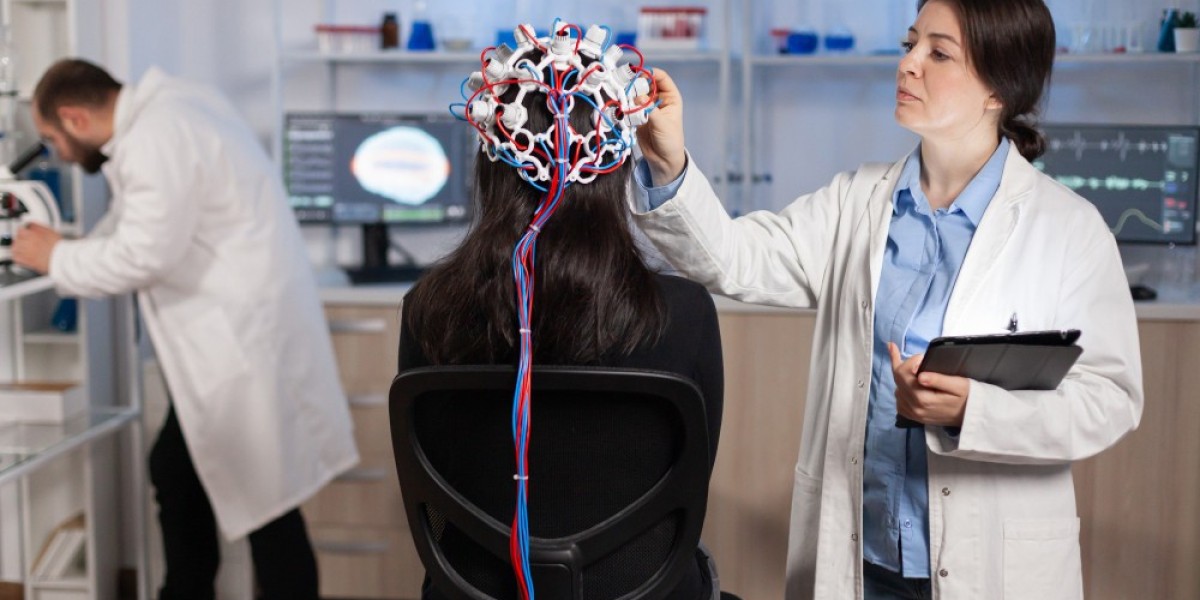
The volume and complexity of neural data being collected today would have been unimaginable twenty years ago. High-density EEG systems, multi-electrode arrays, simultaneous multi-modal recording, wearable biosensors — the hardware side of neuroscience has moved fast. The analysis side has struggled to keep pace.
That gap between data collection and data understanding is one of the defining challenges of modern neuroscience. You can have the best recording setup in the world, but if your analysis pipeline isn't built on solid computational foundations, your conclusions are only as good as your assumptions — and you may not even know which assumptions you're making.
This is the terrain where Neuromatch has staked its ground. Not by building another analysis tool, but by investing in the thing that underlies all good analysis: researcher capability.
Understanding Neuromatch's Place in the Ecosystem
It's worth being specific about what Neuromatch is doing and how it fits into the broader landscape of computational neuroscience resources, because the field has more options than ever and it's not always obvious how they relate to each other.
Neuromatch, at its most essential, is an open nonprofit that runs two things particularly well: a global educational platform (Neuromatch Academy) and a scientifically rigorous virtual conference (Neuromatch Conference). Both are built around the principle that great science shouldn't be gated behind institutional prestige or geographic privilege.
What makes Neuromatch distinctive isn't just the content — it's the design philosophy. The curriculum is collaboratively developed by researchers across dozens of institutions. The conference platform is built to maximize meaningful scientific connection, not just passive attendance. The community is global by intention, not by accident.
For researchers working with neural signals — EEG, MEG, LFP, spike data — Neuromatch is increasingly the place where the field's next generation of computational skills are being built.
EEG Research and the Computational Skill Gap
Why EEG analysis is harder than it looks
Electroencephalography has been around since the 1920s, which gives it an air of maturity as a technology. But the analysis of EEG data has never been more complex or more contested. Modern high-density EEG systems generate massive amounts of data. Artifact rejection, source localization, connectivity analysis, and frequency-band decomposition each carry their own methodological debates and pitfalls.
Researchers who haven't built strong computational foundations often end up using analysis pipelines they don't fully understand — running preprocessing steps because that's what the lab has always done, using statistical tests without fully grasping their assumptions, reporting results without being able to fully defend their methods.
Neuromatch Academy's curriculum addresses this directly. By building from mathematical fundamentals — linear algebra, probability, dynamical systems — the program gives EEG researchers the foundation to actually understand their tools, not just operate them.
The role of good tooling
Analysis is only as good as the tools supporting it, which is why choosing the right eeg software for your lab is a genuinely consequential decision. The ecosystem has expanded significantly in recent years, with open-source options like MNE-Python and EEGLAB offering sophisticated analysis capabilities that were previously only available in expensive commercial packages.
But here's the thing: good tooling and good understanding are not substitutes for each other. A researcher with a deep computational background will extract more insight from a basic open-source tool than a researcher with weak foundations will extract from the most sophisticated commercial platform. Neuromatch invests in the foundation so that whatever tools you use, you use them well.
Spike Detection: A Case Study in Why Foundations Matter
The challenge of automated neural event detection
Detecting neural events from continuous recordings is one of the core challenges in neural data analysis. For EEG data specifically, eeg spike detection is particularly fraught with complexity. Epileptiform spikes need to be distinguished from muscle artifacts, eye movement artifacts, and the general noise floor of the recording. Automated detection algorithms help, but they don't eliminate the need for human judgment — and human judgment requires understanding.
A researcher who knows how detection algorithms work — who understands the amplitude thresholds, the slope detection methods, the template matching approaches — is going to catch errors that a researcher using a black-box tool will miss. They'll know when a detection rate seems too high or too low. They'll understand why a particular filtering choice upstream might be inflating their spike counts downstream.
This is exactly the kind of knowledge that Neuromatch Academy builds. The curriculum on time-series analysis, filtering, and statistical signal detection applies directly to the real-world challenges of EEG spike analysis.
Where machine learning enters the picture
In recent years, machine learning approaches to neural event detection have become increasingly sophisticated. Convolutional neural networks trained on annotated EEG datasets can achieve detection accuracy that rivals expert human reviewers under controlled conditions. But deploying these models well requires understanding not just how to run them, but how they fail — and they do fail, in specific and sometimes surprising ways.
Neuromatch Academy's deep learning curriculum is directly relevant here. Understanding how neural networks are trained, how they generalize (and when they don't), and how to evaluate their performance on your specific dataset is no longer a specialized skill for ML researchers. It's becoming a core competency for any neuroscientist working with complex neural signals.
What the Neuromatch Conference Gets Right
Rethinking who gets to participate
The traditional academic conference has a selection bias problem. It selects for researchers with adequate travel budgets, researchers whose institutions support professional development, researchers who already have the social connections to make networking productive. It systematically underrepresents researchers from lower-income countries, smaller institutions, and earlier career stages.
Neuromatch Conference was designed from the ground up to work differently. By running fully virtually, it eliminates travel cost as a barrier. By using a matching algorithm to connect participants based on research overlap, it replaces social capital as the primary driver of networking with something more equitable.
The quality of scientific exchange
Skeptics of virtual conferences sometimes argue that the depth of scientific exchange suffers in a virtual format. The evidence from Neuromatch suggests otherwise. When the platform is designed specifically for scientific exchange — rather than being an in-person conference awkwardly ported to Zoom — the quality of discussion can actually improve. Participants who would never have connected at a traditional conference find each other and have substantive conversations about their overlapping research.
For EEG researchers specifically, Neuromatch Conference has become a place where computational and experimental approaches to neural signal analysis meet and cross-pollinate in ways that don't always happen within the more siloed traditional conference structure.
Building a Research Practice Around Open, Rigorous Science
Neuromatch represents something larger than a single platform or program. It represents a bet that science is better when it's more open, more collaborative, and more computationally rigorous — and that investing in researcher capability is one of the highest-leverage things the scientific community can do.
For individual researchers, that means engaging with Neuromatch Academy's curriculum seriously, contributing to and participating in the Neuromatch community, and bringing the computational foundations that training builds into your daily research practice.
For lab directors and department heads, it means thinking about Neuromatch Academy as a serious training pathway — not a substitute for mentorship, but a powerful supplement that builds skills faster and more systematically than most traditional training environments.
The future of neuroscience is computational. The question is whether the field's training infrastructure can keep pace with its analytical demands. Neuromatch is one of the clearest answers we have.
If you work with EEG data, neural signals, or computational neuroscience in any capacity, now is the time to explore what Neuromatch Academy's upcoming programs can do for your research practice. Head to the Neuromatch website, review the curriculum, and apply for the cohort that fits your current level. Your future self — the one sitting in front of a complex dataset with the skills to actually understand it — will thank you.