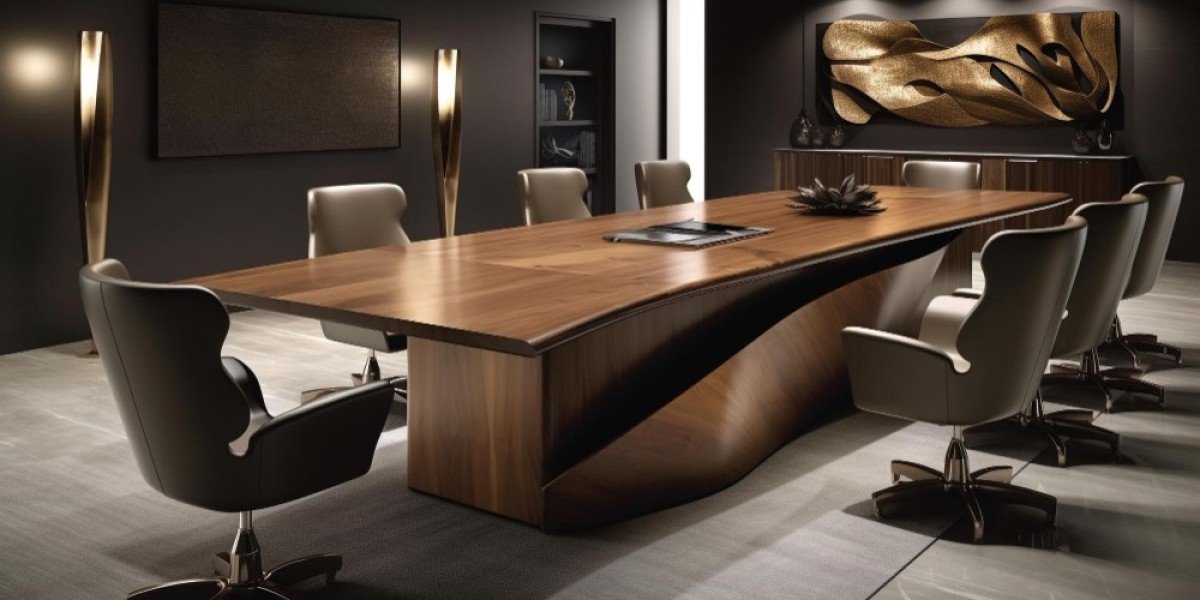

You Spend More Time at Your Desk Than Almost Anywhere Else
Think about that for a second. Between work, side projects, creative pursuits, and the general administration of modern life, most Americans spend somewhere between six and ten hours a day at a desk. That's more waking time than most people spend in their living room. More than they spend at the gym, at a restaurant, or pretty much anywhere else that gets design attention.
And yet — most people put more thought into their couch than their desk.
The couch gets measured. The finish gets debated. Multiple options are considered. And the desk? The desk gets ordered from a website at midnight because it's under three hundred dollars and ships in two days.
There's a real mismatch here between how much time we spend at our workspaces and how much intentionality we bring to designing them. The growing interest in custom desk solutions is, in many ways, just people catching up to that mismatch and deciding to do something about it.
Starting From Scratch: The Design Process Demystified
You don't need to know exactly what you want
One of the biggest barriers to starting a custom desk project is the feeling that you need to have it all figured out before you can begin. You don't. A good maker or designer will guide you through a process that starts with how you work and what you need, and translates that into a design that serves both.
What you do need is clarity on a few foundational things: how you use your workspace every day, what isn't working about your current setup, and what your space actually allows in terms of dimensions. Everything else — materials, finishes, hardware, storage configuration — can be developed through the conversation.
The discovery questions worth sitting with
Before talking to anyone, spend a few minutes actually observing yourself at work. Where do you put things? What do you constantly need that's never in reach? What's always in the way? How does your posture change over the course of a day? Do you spread out, or do you work in a tight focused zone?
These behavioral patterns are the raw material of good workspace design. A custom desk built around how you actually work — not how you think you should work or how a furniture catalog imagines you work — is a fundamentally different thing from one that just happens to be made to order.
The Technical Decisions That Define Functionality
Height and ergonomics: the non-negotiables
The single most important dimension of any desk is the working height, and it's also the dimension most often gotten wrong. The ergonomic ideal depends on your height, your chair, and whether you're primarily typing, writing, drawing, or doing something else entirely.
For seated work, a general principle is that your elbows should be at roughly desk height when your shoulders are relaxed and your forearms are parallel to the floor. For most people, this is somewhere between 27 and 30 inches — which means the standard 29-inch desk is right for some people and wrong for many.
If you're building a custom desk and you're not incorporating a height-adjustment mechanism, get the height right from the start. If you're considering a sit-stand configuration — which is increasingly worth the investment for anyone spending long hours at a desk — think carefully about the full range of motion and ensure the mechanism you choose is smooth and reliable enough that you'll actually use it.
Surface depth and the monitor question
How deep your desk needs to be is largely determined by your monitor setup. A single laptop with an external display needs far less depth than a triple-monitor workstation. Eye-to-screen distance matters for visual comfort and eye strain, and that distance is partly a function of desk depth.
If you're building a custom desk around a serious monitor setup, don't underestimate depth. Twenty-four inches feels comfortable for a single screen; thirty inches gives you much more flexibility for larger displays and the physical working space in front of them.
Storage: designing around real objects, not hypothetical ones
Here's a design principle that gets overlooked constantly: before deciding on storage, inventory what you actually need to store. Open the drawer of your current desk and look at what's in it. Look at what's on top of the desk because there's nowhere else to put it. Look at what's on the floor because it didn't fit anywhere else.
That inventory is your storage brief. Design storage around the actual objects — the notebooks, the cables, the charging devices, the reference files — not around a generic assumption about what a desk should have.
Aesthetic Direction: Making It Yours
The style conversation
A custom desk can go in almost any aesthetic direction — warm and organic, sleek and industrial, minimalist and Scandinavian-influenced, bold and maximalist. The most important thing is that the desk works within the broader visual context of the room it lives in.
If you're working in a home environment, consider the existing palette — the wall color, the floor material, the other furniture. A custom desk that's beautifully made but visually jarring in its context is still a design problem.
If you're designing for a commercial environment — an office, a studio, a practice — the desk needs to serve the brand as much as the function. A Modern reception desk in a design-forward creative agency is going to look very different from one in a law firm or a wellness clinic, and both of those differences should be intentional.
Mixing materials for visual interest
Some of the most compelling custom desk designs use material contrast as their primary design move. A walnut surface on a blackened steel base. A concrete writing surface alongside warm oak drawers. A white lacquered case with brass hardware. These combinations work because they create visual tension that makes the piece feel designed rather than just made.
Don't be afraid of material mixing — but do think about durability and maintenance across the combination. Some material pairings that look great are harder to maintain than others.
Commissioning for a Business: What's Different
When you're commissioning a Custom office desk for a business environment rather than a home, a few things shift. Timeline matters more, because commercial projects often have hard move-in dates. Quantity matters — you may need multiple pieces that share a coherent design language. And durability specifications are generally higher, because commercial furniture takes more abuse than residential.
Find a maker who has commercial experience and references, not just a residential portfolio. The logistics of commercial furniture delivery and installation are meaningfully different from residential, and working with someone who's done it before saves significant headaches.
What a Well-Designed Desk Does for Your Life
A custom desk done right doesn't just look better than what you had before — it functions better, feels better, and changes how you experience the time you spend working. It removes the low-grade friction of a workspace that was never quite right. It makes sitting down to work feel like settling into something that belongs to you.
That's not a small thing. It's a daily quality-of-life upgrade that most people underestimate until they experience it.
If you're ready to stop tolerating a workspace that's almost right and start designing one that actually is, the process is more accessible than you think. Start by finding a custom furniture maker or workspace designer with a portfolio that resonates with you, schedule a consultation, and bring your measurements and your honest description of how you work. The rest follows from there.