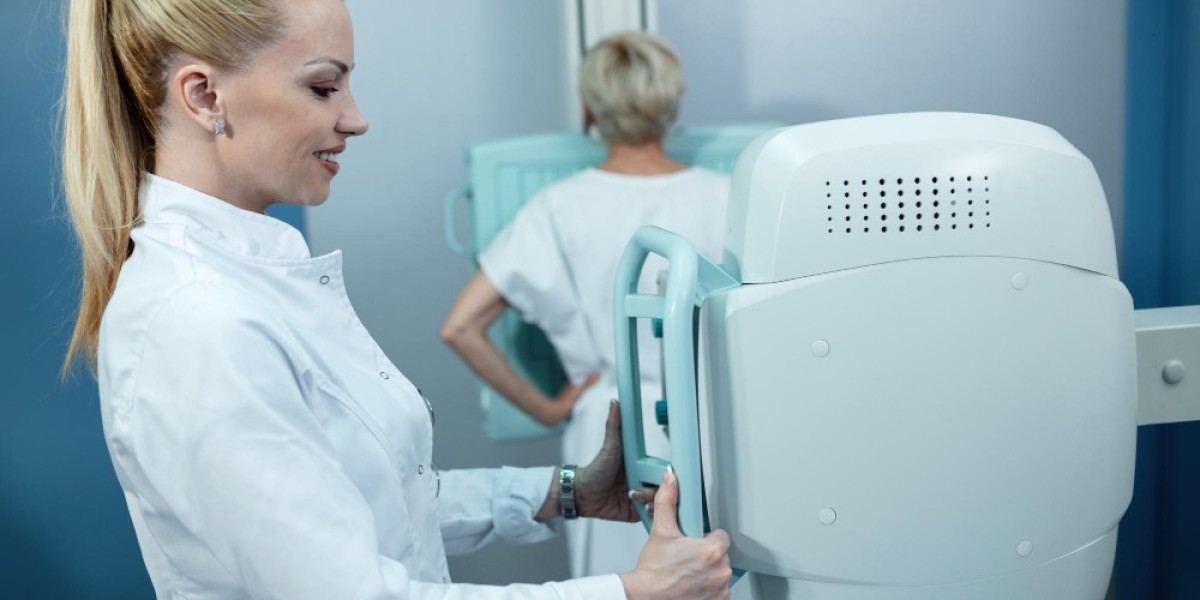

Why the Comparison Matters More Than You Think
Most women in the United States are told, reliably and repeatedly, to get their annual mammogram. That recommendation comes from legitimate evidence and decades of clinical experience. Mammography saves lives — that much is established.
But "mammography saves lives" and "mammography is the best we can do" are two different statements, and conflating them does a disservice to patients who deserve to understand the full picture of what's available to them.
The conversation around breast imaging has become considerably more nuanced over the last several years. New technologies have entered clinical use. The understanding of how breast density affects screening accuracy has become mainstream. And dedicated breast CT — specifically the koning vera 3d breast ct — has emerged as a clinically meaningful alternative for certain patient populations that deserves serious attention.
This isn't about dismissing mammography. It's about understanding the full landscape so you can advocate for yourself effectively.
The Landscape of Breast Imaging in 2025
From film to digital to volumetric
Breast imaging has moved through several generations. Film-screen mammography gave way to full-field digital mammography, which offered better image quality and the ability to adjust contrast and brightness after acquisition. Digital breast tomosynthesis — often called 3D mammography in consumer marketing, though the terminology can be misleading — added limited-angle tomographic reconstruction to improve tissue separation.
Each of these advances was real and clinically meaningful. Each reduced, but did not eliminate, the fundamental limitation of projective imaging: overlapping tissue.
Koning vera breast ct takes a different path entirely. Rather than optimizing the projection approach, it moves to true volumetric acquisition — a full 360-degree CT scan of the breast that generates a complete three-dimensional dataset. The difference between a limited-angle tomographic reconstruction (DBT) and a full volumetric CT is not semantic. It's the difference between a partial picture and a complete one.
What "dedicated" means in dedicated breast CT
It's worth explaining why a dedicated breast CT scanner exists separately from the whole-body CT machines that are standard in hospital radiology departments. Whole-body CT is not optimized for breast imaging — the geometry, the detector characteristics, and the radiation dose parameters are all calibrated for a different clinical purpose.
The Koning Vera system is engineered specifically for the breast. The detector resolution, the X-ray energy, the reconstruction algorithms, and the patient positioning system are all purpose-built for this one application. That specificity matters for both image quality and dose efficiency.
A Direct Comparison: Where the Differences Are Real
Compression versus no compression
Mammography requires breast compression. This is not a design oversight — it serves specific purposes: it reduces the thickness of tissue the X-ray must penetrate, it reduces motion blur, and it reduces radiation dose by shortening the path length. But it also causes discomfort that ranges from mild to genuinely painful, and it distorts breast anatomy.
The 3d breast ct acquisition requires no compression. The breast hangs freely through the table opening during the scan. For patients who have avoided or delayed mammography because of discomfort — a significant and well-documented population — this is more than a convenience. It's a potential barrier-remover to getting screened at all.
Tissue visualization in dense breasts
This is where the clinical comparison gets most significant. On a mammogram, dense fibroglandular tissue appears white. Tumors also appear white. In a dense breast, the resulting image can obscure masses that would be visible in a fatty breast. This masking effect is the reason that women with dense breast tissue face a genuinely higher risk of a cancer being missed on mammography — and it's the reason that dense breast notification laws now exist in most US states.
The koning vera 3d breast ct acquires a volumetric dataset in which the three-dimensional structure of the breast is preserved and tissue types can be differentiated based on CT attenuation values. Masses within dense tissue are often more conspicuous on breast CT than on mammography, which translates directly into earlier detection potential for a population where early detection is particularly critical.
Calcification detection: a genuine trade-off
An honest comparison has to acknowledge the areas where mammography retains advantages. Microcalcifications — tiny calcium deposits that can be an early sign of ductal carcinoma in situ — are detected with high sensitivity on mammography, particularly on high-resolution digital systems. The detection of microcalcifications on dedicated breast CT is an active area of research and system development, and while current breast CT systems can visualize calcifications, the comparison with high-resolution mammography is more nuanced.
This is why the clinical conversation about breast CT isn't "replace mammography with CT universally" — it's about understanding which modality serves which patient and which clinical question best.
How Radiologists Think About This Technology
The learning curve and specialized training
Interpreting breast CT images is a different skill set from reading mammograms. The volumetric dataset is fundamentally different in how it's navigated — radiologists scroll through three-dimensional data rather than reviewing two-dimensional projections. Training and experience with the modality affect diagnostic performance, which means access to a facility with radiologists who have meaningful experience with breast CT interpretation matters.
When evaluating a center that offers the koning vera 3d breast ct, it's entirely reasonable to ask about the volume of breast CT cases the radiologists there have read and whether they have specialized training in the modality.
Integration with the broader workup
Breast CT doesn't exist in isolation. A finding on breast CT may require follow-up with ultrasound, MRI, or targeted mammography. Radiologists consider breast CT findings in the context of clinical history, prior imaging, and the full available workup. Understanding that dedicated breast CT is one tool in a broader diagnostic toolkit — not a standalone answer to all breast imaging questions — reflects how experienced breast imaging specialists actually use it.
Practical Access: Finding This Option in the US
Dedicated breast CT is not yet available at every imaging center in the United States. It's more widely available than it was even a few years ago, but access varies significantly by region. Academic medical centers, larger health systems, and specialized breast imaging practices are the most likely places to find it.
If you're interested in this option, the most direct path is to ask your OB-GYN, primary care physician, or gynecologic oncologist whether dedicated breast CT is available in your area and whether your clinical profile makes it a relevant option. If you've already been told you have dense breasts, have had prior inconclusive mammograms, or have elevated lifetime breast cancer risk, the conversation is particularly worth having.
The king vera 3d breast ct is not a futuristic concept — it's in clinical use now, producing real results for real patients, and it represents a genuinely different approach to breast imaging that matters for a significant subset of the screening population. You don't have to accept that mammography is the only conversation worth having.
Ask your doctor directly about dedicated breast CT. Understand your breast density category. Know what your imaging options are before your next screening appointment — and advocate for the approach that makes the most sense for your anatomy, your risk profile, and your peace of mind.