
What Your Office Is Telling People Before Anyone Speaks
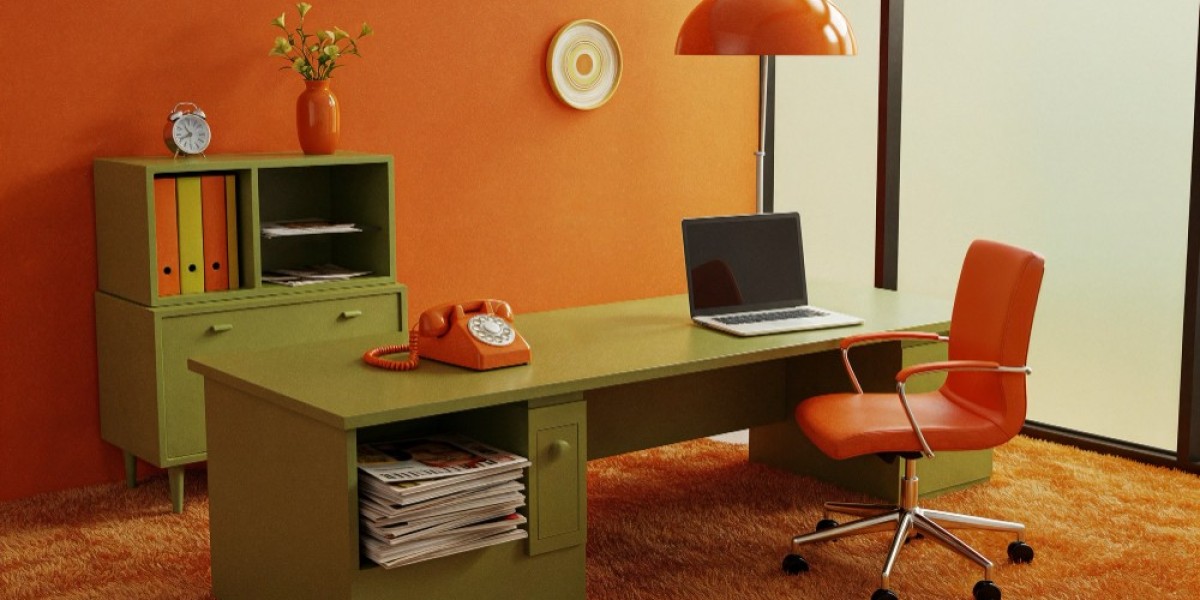
Every office communicates. Walk into a thoughtfully designed corporate workspace and you feel it immediately — the sense that the people who work here are serious, that the company has a point of view, that someone made deliberate decisions about this environment. Walk into a neglected or generic one and you feel that too — the sense that this is a place people tolerate rather than a place they want to be.
That communication happens before any meeting, before any presentation, before any pitch. It happens the moment a prospective hire walks in for an interview, the moment a client enters for a first meeting, the moment an employee arrives on Monday morning.
Corporate office interior design is, at its core, the management of that first impression — and of every subsequent impression the space makes on the people who inhabit it. Companies that understand this treat design as a strategic tool. Companies that don't treat it as an expense to be minimized, and then wonder why their office doesn't seem to support the culture they're trying to build.
This guide is for the leaders, facilities managers, and operations teams who are planning an office project and want to approach it with the strategic clarity it deserves.
Aligning Design With Business Strategy
Start with outcomes, not aesthetics
The most common error in corporate office interior design projects is starting with a mood board. Aesthetics matter — they matter a lot — but they should follow from a clear articulation of what the space needs to accomplish for the business.
What kind of culture are you trying to reinforce? Is collaboration the primary driver of value in your organization, or is deep individual focus work more central to how people produce results? Are you recruiting from a competitive talent pool where the workspace is part of your employment brand? Are you client-facing in a way that makes the impression of the space commercially significant?
These questions should drive the brief you give your design team, not the other way around. A design that emerges from a clear understanding of business outcomes is going to perform better — and stay relevant longer — than one that was chosen because it looked great in a portfolio.
Brand coherence as a design requirement
For companies with a strong brand identity, the office should be a physical extension of that identity. The color language, the material palette, the typography and signage — all of it should feel like it belongs to the same world as the company's visual brand.
This doesn't mean painting the walls your logo color and calling it done. It means working with designers who understand brand expression in three-dimensional space, who can translate the intangible qualities of a brand — its energy, its values, its personality — into spatial decisions that reinforce them.
When a corporate office interior design project succeeds at this, the space becomes a powerful culture artifact. It tells the story of what the company is and what it stands for, every day, to every person who walks through the door.
Budget Strategy: Where to Invest and Where to Hold Back
The hierarchy of investment
Not every element of an office build-out deserves equal investment, and sophisticated project owners understand the hierarchy. The decisions that are hardest to change after construction — structural modifications, HVAC configuration, electrical infrastructure, floor and ceiling systems — deserve the most careful upfront investment and the least compromise on quality. Getting these wrong is expensive to fix.
Furniture and finishes sit at the other end of the spectrum. They're more replaceable, more adaptable, and more subject to the evolution of taste and organizational needs. This doesn't mean buying cheap furniture — quality matters for durability and user experience — but it does mean that being slightly more conservative on furniture spend to protect budget for infrastructure quality is often the right trade.
Contingency is not optional
Every experienced project manager will tell you the same thing, and yet it's advice that gets ignored constantly: budget a meaningful contingency — typically ten to fifteen percent of total project cost — for unknowns. In commercial renovation projects especially, conditions discovered during construction regularly differ from what was anticipated. Unexpected structural elements, hidden mechanical systems, asbestos or other materials requiring remediation — these aren't rare exceptions. They're normal features of working in existing commercial spaces.
A project that was funded without contingency becomes a negotiation under pressure every time something unexpected happens. A project with adequate contingency can absorb those moments and keep moving.
The Build-Out Process: Phase by Phase
Pre-construction: where projects are won or lost
The quality of pre-construction work determines the quality of everything that follows. This phase includes space planning and programming, design development, permit documentation, contractor selection, and trade coordination planning. It's the least visible part of the project and often the most underinvested.
For corporate office interior design projects specifically, the pre-construction phase should include a thorough review of existing conditions — what's actually in the walls, where the mechanical systems run, what the structural constraints are — so that the design is grounded in reality before construction begins.
Construction: managing the trades on the ground
Once construction begins, the quality of day-to-day management on site drives outcomes. This is where construction trades services selection matters most — not just which firms you've hired, but how well they're coordinated, how clearly they understand the design intent, and how consistently they're held to quality standards.
Trade sequencing — the order in which different trades work in the space — is a primary driver of schedule efficiency. Electricians need to rough in before drywall. Mechanical systems need to be coordinated with structural elements. Finish trades need clean, prepared surfaces to work on. Getting the sequence wrong generates rework, which generates cost and schedule overruns.
This is why Onsite Services management — dedicated, experienced project management presence throughout the construction phase — is one of the highest-value investments in any corporate office build-out. A skilled site manager who understands trade sequencing, can identify quality issues before they're buried in the wall, and can make real-time decisions that keep the project moving is worth far more than their cost.
Punch list and close-out: don't rush the finish
The end of construction is where corners get cut most often, because everyone is tired and the pressure to move in is intense. A thorough punch list process — systematically identifying and resolving every deficiency before sign-off — protects the quality of the finished product and the warranty positions of the contractors involved. Resist the pressure to waive punch list items in exchange for a faster move-in date. The deficiencies don't disappear; they just become your problem instead of the contractor's.
Designing for the Next Five Years, Not Just Today
The most durable corporate office interior design investments are the ones made with future flexibility in mind. Technology changes. Team sizes shift. Work patterns evolve. An office designed with modular systems, adaptable infrastructure, and spaces that can be reconfigured without major construction will serve a company's needs across multiple cycles of organizational change.
Think of the office not as a fixed asset but as a living environment — one that should be able to grow and adapt as the business does. The upfront cost of building in that flexibility is almost always less than the cost of a full renovation when needs change.
If you're planning a corporate office project — whether it's a full renovation, a new build-out, or a strategic reconfiguration of existing space — the time to start the conversation is before you have a design in hand. Bring your business goals, your budget parameters, and your timeline to a team that can help you build a project plan that delivers on all three.
Reach out to a qualified corporate interior design and construction partner today. The office your business needs — and your people deserve — is closer than you think.