
Walk down any kitchen aisle or scroll through Amazon, and you'll see them. Beautiful, gleaming copper-colored fry pans priced at $30, $40, even $19.99. They promise restaurant-quality searing, effortless food release, and luxury looks—all for less than the cost of a pizza night.
But are these budget-friendly copper fry pans actually worth your money? Or are they just pretty traps for unsuspecting home cooks?
I tested three copper-colored pans under $50 against a genuine copper pan. Here's the honest truth.
What You're Actually Getting for Under $50
Let's start with reality. A real copper fry pan with a proper Copper Core costs over $100—often much more. Why? Copper is expensive. Thick-gauge copper (2.5mm or more) provides incredible heat conductivity, but the raw material alone costs manufacturers real money.
So what's inside that $30 pan?
In almost every case, you're getting an aluminum or stainless steel base with a thin copper-colored coating sprayed or painted on the outside. The inside is typically a chemical Non-Stick coating. These pans are often sold under flashy brand names like Copper Chef—names designed to sound premium while hiding the cheap construction underneath.
The Performance Test: Heat and Cooking
I cooked three meals in a $35 copper-colored pan. Here's what happened.
Meal one (eggs): The pan heated unevenly. The center was scorching hot while the edges remained cool. My eggs burned in the middle and stayed runny on the sides. The so-called Non-Stick surface worked for the first flip, but by the second egg, sticking had already begun.
Meal two (chicken): I preheated the pan on medium. Within two minutes, a hot spot in the center burned the oil. The chicken seared unevenly—charred in spots, pale in others. Worse, the copper-colored exterior started showing dark discoloration that wouldn't wash off.
Meal three (vegetables): By now, the Non-Stick coating was failing. Vegetables stuck badly. I had to scrape, which left visible scratches. After just three uses, this pan looked six months old.
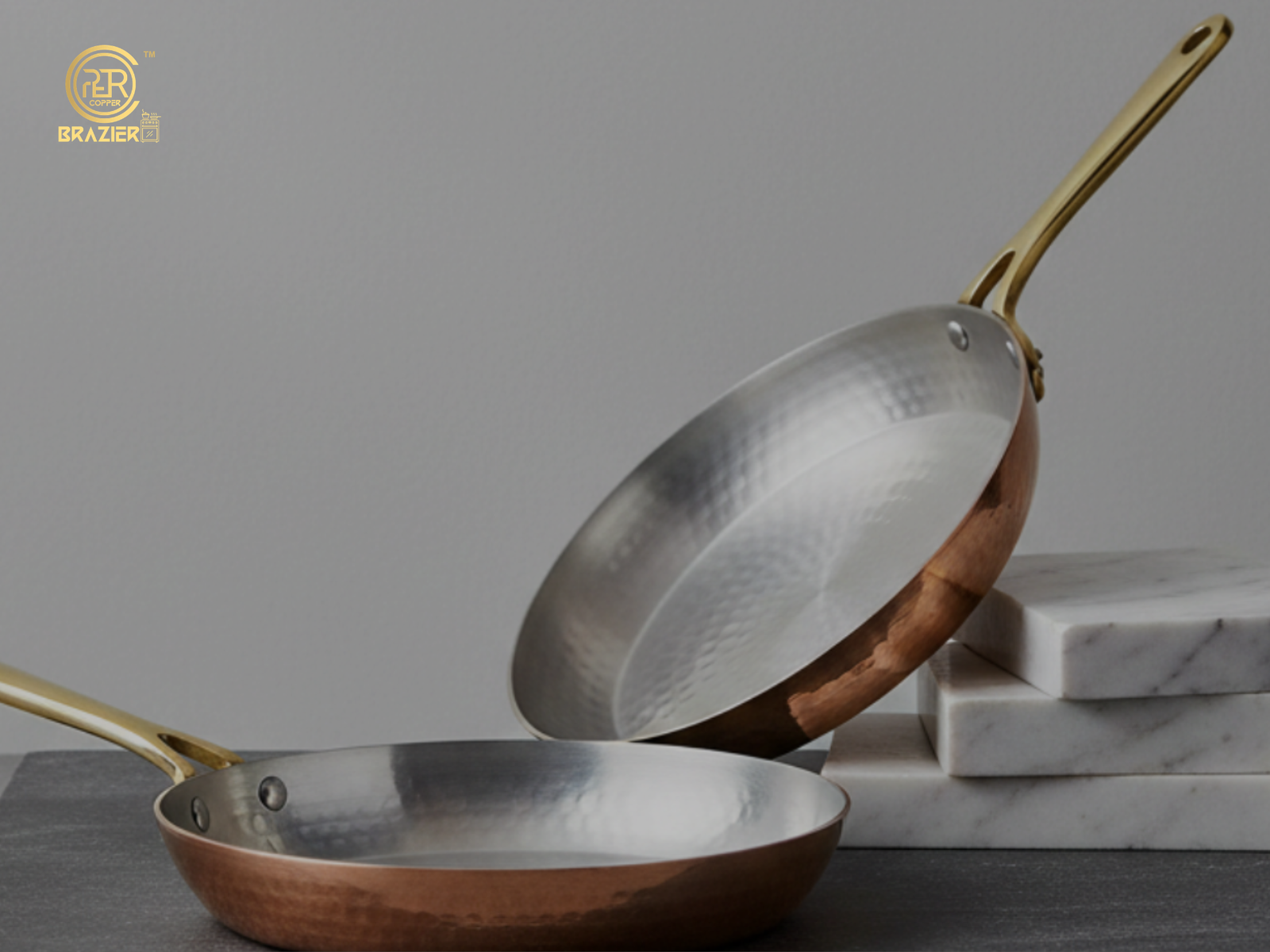
A real Copper Core pan, by contrast, heats evenly across the entire surface. No hot spots. No cold zones. Just consistent, controllable heat. And genuine copper doesn't rely on chemical non-stick coatings—it works beautifully with proper seasoning and temperature control.
The Safety Concern No One Talks About
Here's the part that worries me most. Cheap copper-colored pans use Non-Stick coatings that can scratch, peel, and flake into your food. Once that coating starts degrading—and it will, usually within weeks—you're eating microscopic particles of PTFE or ceramic coating.
Additionally, once the interior coating fails, the exposed aluminum underneath can leach into acidic foods. While the science on aluminum exposure is still debated, most cooks agree: eating flaking non-stick coating is never a good idea.
A quality copper pan with a stainless steel or tin lining has no such risk. No peeling. No mystery chemicals. Just pure cooking.
Durability: Cheap Pans Don't Last
The $35 pan I tested showed visible wear after one week. Scratches on the cooking surface. Discoloration on the copper exterior. Wobbly handle rivets. By week two, the Non-Stick coating was peeling at the edges.
A genuine copper pan, properly cared for, lasts decades—often generations. My grandmother's copper pan still cooks perfectly today. That $35 pan will be in a landfill within a year.
The Verdict: Are Cheap Copper Pans Worth It?
Here's my honest answer: No, with one small exception.
If you need a temporary pan for a dorm room, a vacation rental, or a first apartment on a shoestring budget, a $30 copper-colored pan will technically cook food. But don't expect performance, durability, or safety.
For everyone else—save your money. A cheap "copper" pan is not a bargain. It's a disposable tool that will frustrate you, cook unevenly, and end up in the trash within months.
Invest in a real copper pan with proper Copper Core construction. You'll cook better, eat healthier, and own something that actually lasts.
Want to Know More About Copper Fry Pans? (Why Are They So Expensive?)
If you're still wondering why genuine copper cookware costs more than $50, you're asking the right question. Real copper requires thick-gauge metal, professional lining (tin or stainless steel), and skilled craftsmanship. Cheap pans skip all of that.
To dive deeper into the science, manufacturing, and true cost of quality copper fry pans, read our detailed guide: "Why Are Real Copper Fry Pans So Expensive? The Full Breakdown." It covers everything from copper thickness myths to why cheap pans fail within months.
Have Doubts or Myths About Copper Cookware? Let's Clear Them Up.
We know there's a lot of confusion out there. Is copper safe? Does it react with tomatoes? Do you need to polish it constantly? Are expensive pans really worth it?
If you have any doubts or any myths regarding copper cookware, feel free to get in touch with us. We clear all your worries—whether it's about toxicity, induction compatibility, seasoning, or maintenance. No judgment. Just honest answers from people who cook with real copper every day.
Ready to Buy Pure Copper Cookware?
If you've read this far, you already know that painted aluminum pans with fancy names won't serve you well. You want the real thing.
If you want to buy pure copper cookware, don't hesitate—just visit Copper Brazier. They are trusted and genuine. No fake coatings. No misleading labels. Just authentic, heavy-gauge copper fry pans built to last generations. Whether you need a tin-lined skillet or a copper-core stainless hybrid, Copper Brazier delivers quality you can see and feel.
Final thought: That $50 "copper" pan will cost you more in frustration, wasted food, and replacements. Buy once. Cook better. Never look back.



