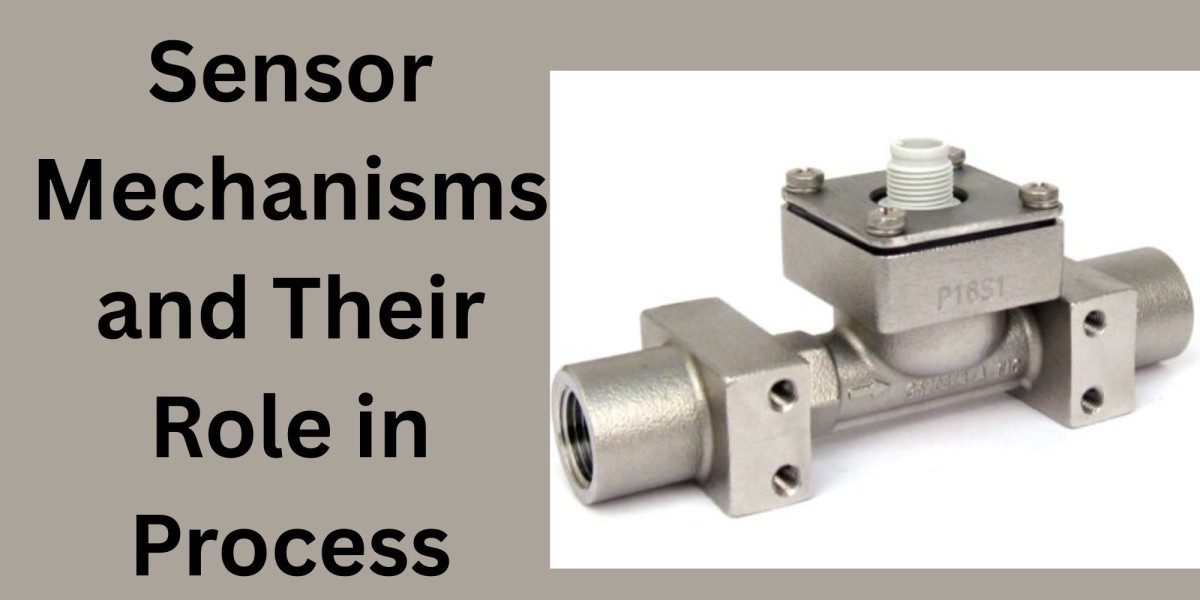

Flow measurement plays a critical role in maintaining efficiency, safety, and quality across industrial processes. Among the various technologies available, vortex-based sensing has gained wide acceptance due to its stability and adaptability in demanding environments. The concept behind this technology relies on well-established fluid dynamics principles that allow consistent flow detection without complex mechanical movement.
In modern industrial setups, the vortex sensor is valued for its ability to deliver reliable measurements even under fluctuating temperature and pressure conditions. Its simple construction and dependable performance make it a preferred choice for industries seeking long-term measurement accuracy with minimal operational disruption.
1. Core Operating Mechanism of Vortex Sensors
The working mechanism of vortex sensors is based on the formation of alternating flow patterns that occur when a fluid passes an obstruction placed in its path. These patterns are generated at a frequency that directly correlates with the velocity of the flowing medium, allowing precise flow rate determination.
This method eliminates the need for rotating or moving parts, reducing wear and enhancing durability. As a result, the sensing mechanism remains stable over time, making it suitable for continuous operation in industrial pipelines where consistent performance is essential.
2. Key Components and Signal Detection Process
A vortex sensor system comprises several essential elements that work together to capture and process flow data. These typically include a flow obstruction, a sensing element, and an electronic unit that converts the signal. Each component plays a specific role in ensuring accurate detection and interpretation of flow behavior.
The sensing element identifies pressure or velocity changes created by the flow patterns and converts them into electrical signals. These signals are then processed to produce readable output values that can be integrated into control systems for monitoring and decision-making.
3. Accuracy and Performance Characteristics
Accuracy is one of the defining strengths of vortex sensors, particularly in applications involving steady flow conditions. Their measurement consistency is largely unaffected by changes in fluid density, making them reliable across a range of operating environments.
Performance stability is further enhanced by their resistance to vibration and contamination. This allows them to maintain precision even in harsh industrial settings, where other flow measurement technologies may experience drift or degradation over time.
4. Integration of Vortex Sensors in Industrial Systems
Vortex sensors are designed to integrate seamlessly into existing pipeline systems with minimal modification. Their compatibility with standard communication protocols enables easy connection to distributed control systems and automated monitoring platforms.
Once integrated, these sensors support real-time data collection and process control. This helps operators optimize system performance, identify inefficiencies, and maintain consistent operational standards across production cycles.
5. Applications of Vortex Sensors in Process Optimization
Industries rely on vortex sensors in applications where accurate flow measurement directly impacts process efficiency. Common uses include steam monitoring, gas flow measurement, and liquid flow control in manufacturing environments.
By providing stable and repeatable measurements, these sensors help reduce energy waste, improve product consistency, and support preventive maintenance strategies. Their contribution to process optimization lies in their ability to deliver actionable data that enhances overall system performance.
6. Advantages and Limitations of Vortex Sensor Usage
One of the primary advantages of vortex sensors is their low maintenance requirements, as they have no moving parts. They also offer a long service life and consistent accuracy, which helps reduce operational costs over time.
However, certain limitations must be considered, such as sensitivity to low flow rates and the need for adequate straight pipe lengths for optimal performance. Understanding these factors allows engineers to deploy the technology effectively and maximize its benefits.
7. Conclusion: Enhancing Process Efficiency with Vortex Sensors
Vortex sensors represent a practical and efficient solution for flow measurement in industrial environments. Their robust design, dependable accuracy, and adaptability make them suitable for a wide range of applications where process control is critical.
By selecting and implementing vortex sensors correctly, industries can achieve improved operational efficiency, better resource management, and long-term reliability. Their role in process optimization continues to grow as industries prioritize precision and performance in modern engineering systems.