
In modern industrial production, the safe operation of equipment relies heavily on high-performance sealing solutions. As indispensable sealing components in flange connections and piping systems, gaskets directly determine the reliability and operational efficiency of equipment. Corrugated graphite gaskets, featuring a unique composite structure of a metal core and expanded graphite, have gradually become the preferred choice for diverse industrial sealing scenarios, thanks to their exceptional sealing capability, outstanding high-temperature resistance, and wide adaptability. This article comprehensively analyzes the structural principles, performance advantages, application fields, as well as selection and maintenance methods of corrugated graphite gaskets, providing valuable references for engineering design and equipment operation.
Structural Principles of Corrugated Graphite Gaskets
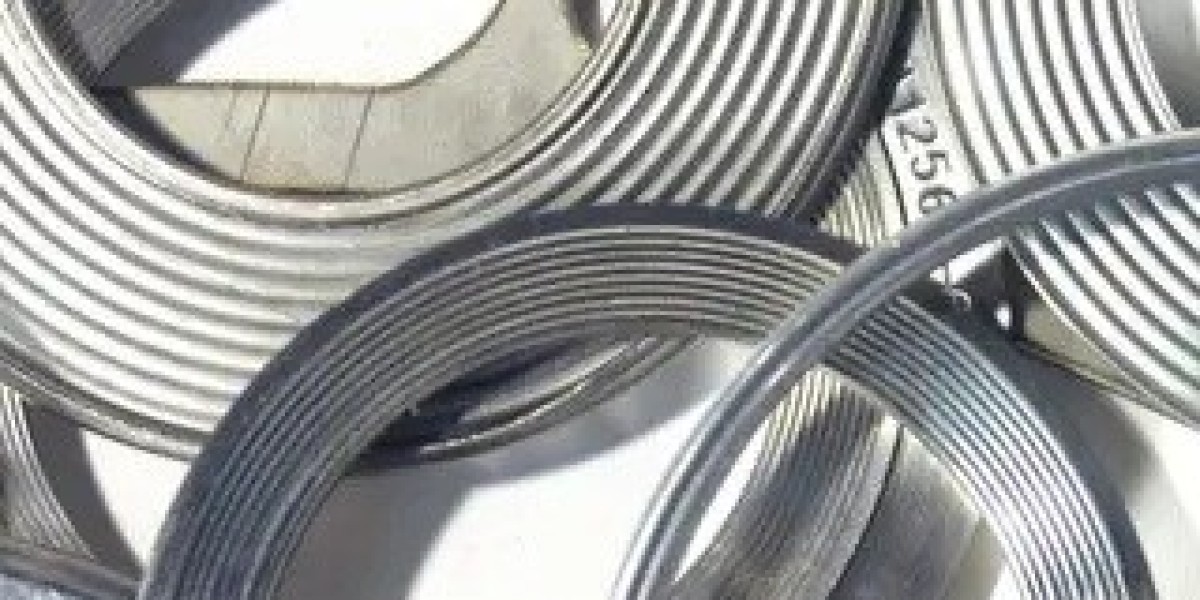
A corrugated graphite gasket is a high-performance sealing element composed of a metal core and expanded graphite. The upper and lower surfaces of the metal core are precision-machined with specially designed concentric grooves, which are offset from each other to form a unique corrugated structure. A layer of expanded graphite with appropriate thickness is then bonded to the metal core, forming the integrated gasket. This sophisticated structure enables the graphite material to be compressed into the grooves when the flange is tightened during application. The annular peaks of the metal core form tight contact with the flange surfaces and undergo elastic deformation under further compression, while the expanded graphite is highly compacted and enclosed in the annular space between the metal core and flange surfaces—synergistically achieving superior sealing performance.
Performance Advantages of Corrugated Graphite Gaskets
The unique structural design of corrugated graphite gaskets endows them with a range of distinctive performance advantages, making them stand out in the field of industrial sealing. The key advantages are elaborated as follows:
1. Exceptional Sealing Performance
Corrugated graphite gaskets integrate the dual sealing effects of ridge-shaped metal sealing and expanded graphite material sealing. Unlike spiral-wound gaskets with helical sealing bands, their sealing bands are completely independent, which contributes to their extraordinary airtightness. Airtightness tests show that under 35 MPa compression, the leakage rate of such gaskets can reach as low as 10⁻⁵ cm³/s. Even under low-pressure conditions (e.g., 15 MPa), the airtightness still achieves 10⁻³ cm³/s—far exceeding the 10⁻² cm³/s standard for asbestos rubber sheets. This outstanding sealing performance effectively prevents the leakage of gases or liquids, laying a solid foundation for the safe operation of industrial equipment.
2. Excellent Elasticity and Stress Relaxation Resistance
The metal core of corrugated graphite gaskets adopts a special structure similar to an elastic element, providing the entire gasket with good elasticity. During operation, the elasticity of the metal core can effectively adapt to fluctuations in pressure and temperature, maintaining tight contact between the gasket and flange surfaces. Meanwhile, since the elasticity is mainly derived from the metal core, the expanded graphite material avoids stress relaxation under long-term compression, ensuring the gasket retains excellent sealing performance over an extended service period. This is critical for industrial equipment requiring long-term stable operation, eliminating leakage risks caused by degraded gasket performance.
3. Superior High-Temperature and Corrosion Resistance
Both the metal core and expanded graphite of corrugated graphite gaskets exhibit excellent high-temperature resistance and corrosion resistance to fluids. Expanded graphite maintains structural stability under high-temperature conditions without aging or losing sealing performance. The metal core is selected based on specific operating environments—common options include carbon steel and stainless steel—to meet the corrosion resistance requirements of various fluid media. This combination enables corrugated graphite gaskets to operate stably under harsh conditions, such as high-temperature, high-pressure, and corrosive fluid environments in the petrochemical industry, as well as high-temperature steam environments in the power industry.
4. High Safety and Reliability
In service, the annular peaks of the metal core form tight contact with the flange surfaces, and the expanded graphite is securely enclosed by the robust metal core and flanges. This structural design prevents the graphite material from being scoured by high-pressure fluids or collapsing—an issue that may occur with spiral-wound gaskets—greatly enhancing the gasket’s safety and reliability. Compared with metal gaskets, corrugated graphite gaskets are more convenient to install and use, avoiding sealing failure due to improper installation. Additionally, their integrated structure is less prone to damage during transportation and installation, further improving operational safety.
5. Wide Applicability
Corrugated graphite gaskets are highly versatile, suitable for almost all operating conditions, including extreme temperatures (-200°C to +700°C) and pressures (vacuum to 25 MPa). By selecting appropriate metal core materials, they can be tailored for use with most corrosive fluids. Whether in high-temperature, high-pressure steam pipelines, low-temperature liquefied gas storage tanks, or highly corrosive chemical medium pipelines, corrugated graphite gaskets deliver reliable sealing. The pure graphite non-metallic sealing layer in their dual-seal mechanism ensures excellent sealing even with minimal flange surface machining and maintains high airtightness under low compressive stress, making them particularly suitable for gas systems and other scenarios with strict sealing requirements.
6. Cost-Effectiveness
Corrugated graphite gaskets offer excellent economic value. In industries such as petrochemicals and power plants, carbon steel corrugated graphite gaskets can replace spiral-wound or ridge-shaped gaskets for non-corrosive fluids (e.g., various oils and steam), achieving significant cost savings. Furthermore, they can be reused in general applications, further reducing operational costs. Their ease of installation ensures installation quality, avoiding equipment damage and increased maintenance costs caused by improper fitting. In the long run, they provide high cost-effectiveness for industrial operations.
Applications of Corrugated Graphite Gaskets
Since their market launch in the early 1990s, corrugated graphite gaskets have been widely adopted in petroleum, chemical, power, textile, and other industries due to their superior performance. Their actual operating parameters span from low pressures to 26 MPa, and temperatures range from -96°C in air separation systems to 700°C in high-temperature cracking systems. They can be perfectly matched to flange sizes ranging from DN10 piping flanges to DN2500 vessel flanges.
In the petroleum industry, corrugated graphite gaskets are widely used in crude oil pipelines and refinery equipment flange connections, effectively preventing oil leakage and ensuring production safety. In the chemical industry, they provide reliable sealing solutions for reactors, heat exchangers, and storage/transport equipment for various chemical media, guaranteeing smooth production processes. In the power industry, they are applied in steam pipelines, turbines, and boilers of power generation units, ensuring stable operation and improving power generation efficiency. In the textile industry, they are used in steam and hot water pipelines, meeting the temperature and pressure requirements of production processes and ensuring product quality.
Types and Selection of Corrugated Graphite Gaskets
Corrugated graphite gaskets are mainly classified into two types: those with positioning rings (for flat flanges) and those without positioning rings (for raised-face flanges). In practical applications, the appropriate type should be selected based on the flange type and operating conditions. For different temperatures and media, matching metal core and non-metallic materials are essential. For example, stainless steel or other high-temperature resistant metals are preferred for high-temperature environments, while nickel-based alloys are recommended for highly corrosive media. Meanwhile, the performance of the expanded graphite material can be adjusted according to specific operating conditions to ensure optimal sealing efficiency.
Installation and Maintenance of Corrugated Graphite Gaskets
Proper installation and regular maintenance are crucial to maximizing the sealing performance and service life of corrugated graphite gaskets.
During installation, flange surfaces must be clean, flat, and free of debris, scratches, or other defects. The gasket should be placed centrally on the flange, with the positioning ring (if equipped) aligned with the flange holes. Bolt tightening must follow a symmetrical, uniform sequence, with torque gradually increased to avoid uneven stress distribution that could compromise sealing. After installation, gas or liquid leak detection should be performed to verify sealing integrity.
During operation, regular inspections of the gasket’s sealing status are necessary to detect potential leaks promptly. For equipment operating continuously for extended periods, periodic gasket replacement is recommended to maintain reliable sealing. When replacing gaskets, the flange surface must be thoroughly cleaned to remove residues of the old gasket, ensuring tight adhesion of the new gasket. Proper storage is also important—gaskets should be protected from moisture, high temperatures, and mechanical damage to extend their service life.
Conclusion
In summary, corrugated graphite gaskets, with their unique composite structure, excellent sealing performance, and broad applicability, play an irreplaceable role in the industrial sealing field. Whether in high-temperature, high-pressure petrochemical pipelines or low-temperature, low-pressure liquefied gas storage tanks, they ensure the safe and stable operation of equipment. By adopting scientific selection criteria, standardized installation procedures, and regular maintenance practices, users can fully leverage the outstanding performance of corrugated graphite gaskets, achieving cost-effective, long-term applications and safeguarding the safety and reliability of industrial equipment.
China manufacturer offers high-quality industrial products with competitive pricing and advanced production capabilities.